
Over the years, working around classic cars every day, one pattern keeps repeating itself. Markets go up and down. Trends come and go. New “opportunities” appear, make headlines, and sometimes disappear just as quickly. But well-chosen classic cars quietly continue doing what they have always done: holding their value and, in many cases, steadily increasing it.
This doesn’t mean every old car is an investment, and it certainly doesn’t mean quick profits. What it does mean is that certain classic cars, when bought correctly, have proven to be remarkably stable assets over long periods of time.

One reason is simple: they are real, physical objects. You can see them, inspect them, store them, insure them, and maintain them. Their value is not tied to quarterly reports, stock market sentiment, or digital speculation. Instead, it is tied to things that change very slowly — rarity, condition, originality, historical importance, and desirability.

Another factor we see again and again is supply. Manufacturers are not producing more original 1960s Ferraris, early Porsche 911s, or classic Mercedes-Benz models. Production numbers are fixed forever. At the same time, interest in classic cars continues to grow globally, with buyers coming from many different countries and generations. When a limited supply meets steady or increasing demand, values tend to remain supported.

We also notice that high-quality cars with proper documentation and correct specifications tend to behave differently from speculative assets. They rarely experience dramatic crashes. Even during uncertain economic periods, good cars usually continue to trade, sometimes more slowly, but without the extreme volatility seen in other markets. This makes them useful not only as collectibles, but also as a way to diversify beyond traditional investments.

There is another aspect that is easy to underestimate until you experience it: ownership itself. A classic car is not something that sits unseen in an account. It can be driven, shown, enjoyed, and shared. Even in years when prices remain flat, the owner still has something tangible and meaningful. Very few investments offer that kind of return.
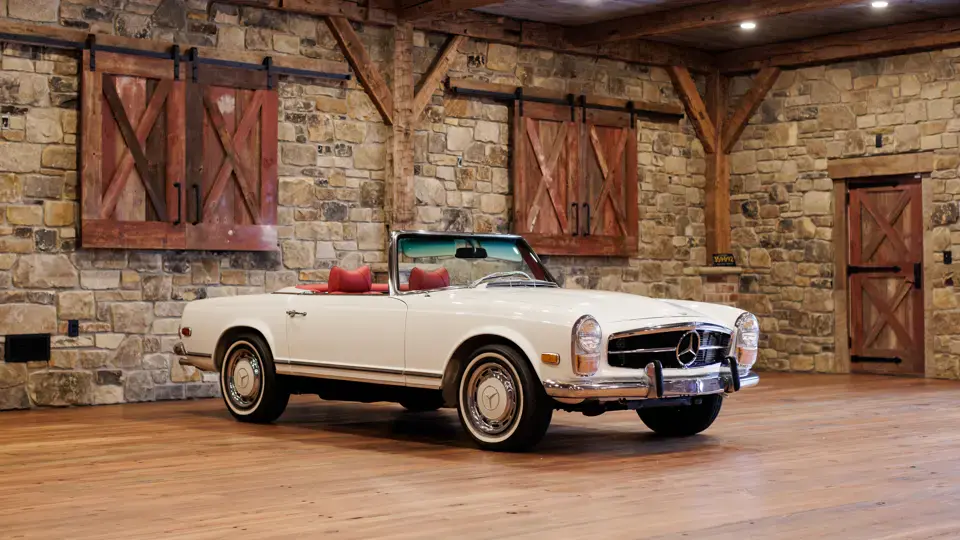
Rising restoration and maintenance costs also play a role. As skilled labor, parts, and materials become more expensive, properly restored and well-preserved cars become harder and more costly to replace. Over time, this tends to support the value of cars that are already in good condition.

From what we have observed across many years in the industry, classic cars, when selected thoughtfully and owned with a long-term view, continue to represent a relatively safe and stable place to store value — combining tangible assets, historical resilience, and genuine enjoyment in a single package.

